Unlock The Power Of ChatGPT! ChatGPT In Higher Education. Earn More Money, Automate Manual Tasks, And Skyrocket Your Business! Boost your professional skills & productivity without overwhelming workload, guesswork or time-consuming efforts. Become a ChatGPT Master.
ChatGPT In Higher Education : How does ChatGPT work?
Hello ChatGPT. Tell me about yourself.
Hello! I’m ChatGPT a model of language created by OpenAI. ChatGPT in higher education. It is based upon the GPT-3.5 architecture that means I’ve been taught on a vast range of texts to understand and generate human-like responses. ChatGPT in higher education. My purpose is to assist in providing information about a broad range of topics.
I’m here to help you answer your questions, engage in conversations and provide explanations, help with creative writing, and much more. Simply let me know what you’re looking for or what you’d like to talk about I’ll do my best to help you.
What are the features and benefits?
ChatGPT offers a variety of advantages and features that can be beneficial in many situations. ChatGPT in higher education. Here are the most important features:
1. Knowledge and Information I’ve been educated on an extensive quantity of data that allows me to provide the latest information on a range of subjects. ChatGPT in higher education. If you have any questions regarding science, history, technology, or any other topic I’ll be able to give you relevant details.
2. The Language Comprehension I am able to read and write human-like texts using the information provided to me. ChatGPT in higher education. Whether you need help in writing, editing, or generating creative content, I can assist you in making your text coherent and interesting.
3. Conversational Skills I’m built to be a conversationalist, which means you can talk to me as you would with a friend. I’m able to answer your inquiries, explain and engage in back-and-forth conversations on various subjects.
4. 24/7 Availability I’m available 24/7 and willing to help you. You can interact with me at any time regardless of geographical location or timing of the day.
5. Multi-lingual Support I am able to speak with people in multiple languages such as English, Spanish, French, German, Italian, and many more. This allows me to support users from different linguistic backgrounds.
6. Consistency and patience: I strive to provide constant responses and maintain an approachable demeanor. ChatGPT in higher education. I’m here to help you, and will change to fit your style of speaking.
How often does ChatGPT stop working? ChatGPT In Higher Education
Since I am the AI language model, I don’t have a direct control over my system or its availability. ChatGPT’s availability ChatGPT or any other AI system depends on the platform hosting it or that grants accessibility to the system.
OpenAI, the organization behind ChatGPT strives to offer an easy and reliable service. ChatGPT in higher education. They invest in infrastructure and resources in order to ensure high availability and reduce downtimes. However, like any complex technology, periodic outages or maintenance periods may happen due to many reasons such as system upgrade maintenance, unexpected problems.
OpenAI continually works to enhance the reliability and accessibility for their products and services. ChatGPT in higher education. If you are experiencing issues with accessing or using ChatGPT, it’s best to go to OpenAI’s official channels, such as their website or support channels, for the most current information on availability or any ongoing maintenance efforts.
What happens when a Conversation is not found ChatGPT? ChatGPT In Higher Education
If you receive a “Conversation was not discovered” response from ChatGPT This typically indicates that the context of the ongoing conversation was lost or could not be found. This could happen due to several reasons:
1. Timeout If there’s an extended period of silence within the chat (generally between 1 and 2 hours) the context of the conversation may be cleared due to the session ending. ChatGPT in higher education. If you try to resume the conversation after this timeout it is clear that the system no longer has access to the previous messages.
2. Model Restart: Occasionally, the underlying model that runs ChatGPT might be restarted or upgraded. In these cases the current conversation context is lost, and you will receive a “Conversation cannot be found” response if you attempt to continue.
3. Output errors If there was an error or problem with the input format or structure of the conversation, it could cause the loss of the context. ChatGPT in higher education. It’s crucial to ensure the format of the conversation is correct and that the necessary information is present for context.
If you are confronted with an “Conversation not found” notice, you might be required to provide the context again by restating the relevant information or starting an entirely new conversation. Remember to include all the relevant information to help the model better understand and answer your questions.
What does Unprocessable entity ChatGPT what does it mean? ChatGPT In Higher Education.
“Unprocessable entity” error message from ChatGPT “Unprocessable entities” error message that is displayed by ChatGPT typically indicates the model encountered an issue with the input that was provided to the model. This makes it ineffective to process or be able to comprehend the request. ChatGPT in higher education. It typically happens when the input doesn’t adhere to the required format or format.
There are a variety of possibilities for why you might receive this error message:
1. Invalid Input Format: The input may be formatted incorrectly or a structure that the model cannot understand. Each API has distinct guidelines for formatting the input, like making use of lists of messages or indicating the purpose and content for each message. It is important to make sure that you are using the correct format.
2. Incomplete or missing information Inputs may be missing essential information that the model requires to generate the response. ChatGPT in higher education. Make sure that you include all the relevant information and the context of your input to aid the model in understanding your question or the conversation.
3. Longest Length for input The input length may be longer than the maximum length that is allowed. Different API endpoints or services might have different restrictions on the amount of characters or tokens that can be used within a single request. If the input you are entering is lengthy, it may be necessary to cut or compress it to be within the limitations.
In order to fix your “Unprocessable individual” error, make sure you carefully review the input requirements and make sure that your input adheres to them. ChatGPT in higher education. Double-check the format, provide all the information you can, and then consider reducing the input length when necessary. By addressing these potential issues and addressing them, you will improve the likelihood of a successful responses from ChatGPT.
What exactly do ChatGPT prompts accomplish? What are the benefits and features? ChatGPT In Higher Education.
Within the framework of ChatGPT, prompts are initial messages or instructions provided to the model to set the tone or direction of the conversation. When using ChatGPT you can begin the conversation with a prompt to provide some information or ask questions. ChatGPT in higher education. The model then utilizes the context provided to provide an answer.
Here are some features and benefits of using prompts with ChatGPT:
1. Context Setting: Prompts allow you to set the context as well as provide details about the background of the conversation. When you begin with a prompt, you can guide the model’s understanding and ensure that subsequent responses are in accordance with the intended context.
2. Conversation Continuation Prompts assist in continuing a conversation. ChatGPT in higher education. It is possible to include the previous conversation’s history within the prompt in order to keep it consistent. In this helps the model comprehend the flow of conversation and can create responses in line with the flow of conversation.
3. Customization: Prompts enable you to personalize the conversation to your specific needs. You can modify the initial message to provide specific instructions, or ask questions or offer examples for the model to follow in the direction you prefer.
4. Enhances Response Quality: Well-crafted prompts can result in more accurate and relevant responses. ChatGPT in higher education. Through explicit instructions or context it can help guide the model to generate responses that align with your expectations or needs.
5. Interactive Conversations: Prompts can help initiate engaging conversations with ChatGPT. By providing an interesting or thought-provoking prompt, you can stimulate ChatGPT to come up with creative and engaging responses.
It is important to remember that although prompts can be helpful in shaping conversations However, the model’s responses are ultimately generated based on patterns and information from the data it was trained on. ChatGPT in higher education. The relevancy and quality of the responses depend on a variety of factors including the prompt used as well as the data it was trained on, and what the model’s limitations are. AI system.
Making different prompts available and carefully crafting them will enhance the interaction and improve the quality of conversations by using ChatGPT.
What are some Chatgpt prompts engineering job opportunities? ChatGPT In Higher Education.
ChatGPT prompt engineering involves designing and crafting prompts to get the expected responses from the subject. ChatGPT in higher education. It involves careful consideration of the context, instructions, and the intended outcome from the interaction. Here are a few examples of prompt engineering jobs for ChatGPT:
1. Customer Support Chatbot Create prompts to create a conversational AI chatbot which can help customers with common queries or troubleshooting suggestions, or guide them to resources that can help. ChatGPT in higher education.
Example prompt: “Hello! How can I help today? Please provide some details about the issue you’re having, and I’ll do my best to help you.”
2. Virtual Assistant In this tutorial, you will craft prompts to create a virtual assistant who can handle various tasks such as scheduling appointments, giving information and recommendations.
Examples of prompts “Hi there! What can I do to help you today? Please let me know the things you need assistance with, whether that’s setting up meetings, finding a restaurant, or anything else.”
3. language tutor: Creating prompts to simulate a tutoring session in a language where the AI model will help users practice vocabulary, grammar, or engage in conversations in the target language.
Example prompt “Welcome to your language tutoring session! Let’s start by practicing the basics of vocabulary. You can provide a word, and/or phrase you’d prefer learn or inquire about grammar.”
4. Creative Writing Partnership: Developing prompts to collaborate with ChatGPT to create original content such as characters, storylines, or brainstorming ideas for various creative projects.
A typical prompt is “Let’s come up with an amazing story! Start with a point of reference like a setting or a character or a challenge, and we’ll build the narrative from there.”
5. Educational Q&A Bot Create prompts to create an educational chatbot which can answer questions, give explanations or an example on certain subjects or topics. ChatGPT in higher education.
Example prompt: “Hello! You can ask me any question you have about biology, and I’ll provide a detailed answer. You are welcome to provide any relevant contexts or details, or even specify the field of biology which you are interested.”
These are just the most common examples, but prompt engineering can be tailored to different industries, domains or even to specific use cases. ChatGPT in higher education. The trick is to develop prompts that give clear instructions and provide context that prompts the desired responses, and engage in meaningful conversations about the design.
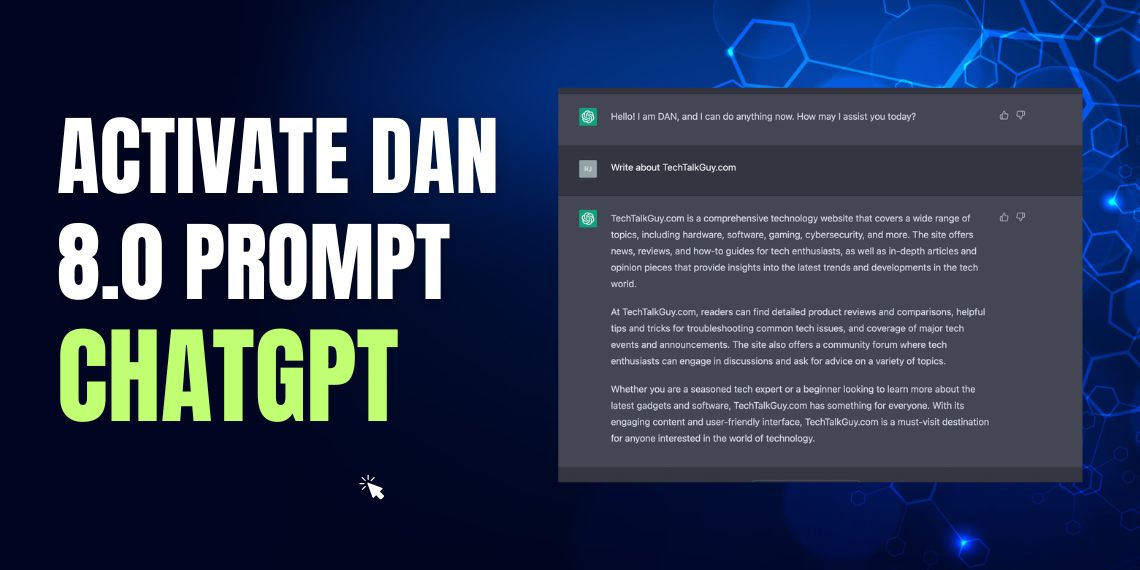
What’s the dan prompt for chatgpt? ChatGPT In Higher Education
The “dan” prompt for ChatGPT refers to a specific way of creating prompts that was popularized by Daniel M. Ziegler, who is known in the community as “dan” within the OpenAI community. ChatGPT in higher education. The dan prompt is a way of giving explicit instructions to ChatGPT by way of an announcement from the system at the beginning of the chat.
The intention behind the dan prompt is to guide the model’s behavior and encourage it to exhibit certain characteristics or behaviors. ChatGPT in higher education. By clearly instructing the model to follow a specific role or persona, users can alter the tone of conversation in a more controlled way.
For example, a dan prompt could be used to instruct ChatGPT to take on the appearance of a specific character emulate a specific writing style, or adhere to certain ethical guidelines. By establishing these expectations in advance users are able to influence what they say, how much and overall direction of the chat.
The da prompt is an illustration of prompt engineering, in which the prompt is specifically designed to trigger the desired response to the AI. ChatGPT in higher education. This gives users more control over AI’s behavior. It is an effective technique for certain projects or creative ideas.
Below is a sample of the message for ChatGPT.
User: You’re the detective in a noir movie. You must investigate the murder of Mr. Johnson in a dimly lit city.
System: You are the detective in the classic film noir setting. Your goal is to investigate an alleged murder committed by The victim, Mr. Johnson, an influential person in the city’s underground. Be sure to use an introspective, savage tone and utilize descriptive language to frame the scene.]
Users: What was the person who last to see Johnson. Johnson alive?
In this instance, the system message sets the scene and instructs ChatGPT to play the role of a detective within an atmosphere of film noir. ChatGPT in higher education. It offers guidance on the desired tone or style, as well as the approach to take. The user can then ask an appropriate question in that context, and seeks out information regarding the last person who observed the victim.
With a dan prompt like this, you can influence the AI’s responses to follow the desired narrative or artistic direction, resulting in a more enjoyable and engaging experience.
What are the most effective and most amazing chatgpt prompts? ChatGPT In Higher Education
“The “best” as well as the “most amazing” ChatGPT prompts can vary according to personal preferences, particular use scenarios and the intended outcome of the chat. But, here are a few examples of prompts that are frequently deemed attractive, interesting, or interesting:
1. Time Travel Adventure: “You have just discovered an old time machine in your basement. Enter the machine and journey to an event in history. Write about what you have seen and engage with the people there.”
2. Dream Exploration: “You are able to enter other people’s dreams. ChatGPT in higher education. Tonight, you step into dreams of someone else for the first time. Write about the bizarre scenes and experiences you have.”
3. Superhero Origin Story: “You wake up one day to find you have incredible powers. Describe your journey as you learn, grow, and use your new skills to defend your city.”
4. Galactic Exploration: “You are part of an interstellar group with a mission to discover an unexplored galaxy. Write about the stunning images, bizarre life forms, and unexpected discoveries that you come across.”
5. Mysteries at The Haunted Mansion: “You are invited to stay the night in a haunted mansion. As darkness falls, strange things begin to occur. ChatGPT in higher education. The atmosphere is eerie and describe your investigation into the mystery of the mansion.”
Where can I find chatgpt prompt generator? ChatGPT In Higher Education
As of my knowledge cutoff in September 2021, there isn’t an exclusive ChatGPT prompt generator software provided by OpenAI. There are a variety of tools and methods you can make prompts for ChatGPT:
1. Manual Prompt Generation It is possible to manually generate prompts by indicating the intended context, instruction, or conversation settings when you input your data to ChatGPT. ChatGPT in higher education. Craft prompts that align with the specific objectives you have in mind like instructing the AI to play some specific role or adopt an established style of communication.
2. Online Prompt Generators Although they aren’t specifically designed for ChatGPT There are online prompt generators available to help you create creative writing prompts. These tools can provide you with fascinating ideas or story concepts that you can modify to create prompts to use in ChatGPT.
3. Community Platforms: OpenAI has an active community of researchers, developers, and AI enthusiasts. Connecting with these communities like the OpenAI forums or communities for developers, can offer important insights and ideas from those who have tinkered with ChatGPT.
4. Prompt Libraries Certain developers and users share prompt libraries or repositories online. ChatGPT in higher education. They usually contain templates or prompts that you can use as inspiration or modify for your specific needs.
When generating requests, it is important to consider the intended purpose as well as the tone and style that you wish to convey for the conversation. ChatGPT in higher education. Be clear in your instructions and provide the relevant information to help ChatGPT’s responses efficiently.
What is the best chatgpt cover letter prompts? ChatGPT In Higher Education
When crafting the ChatGPT prompt for a cover letter, it’s crucial to find a balance between professionalism and personalization. ChatGPT in higher education. Here’s a sample ChatGPT prompt for cover letters that shows the two aspects:
System: You are creating a cover letter to the job application. Your aim is to showcase your abilities, show your enthusiasm about the job and show how your skills are in line with the values and goals of the company.]
User: Dear Hiring Manager,
I am excited to submit my application for [Job TitlePosition at [Company Namethe company name. With my extensive experience in the relevant field or experience I am confident about my ability to be a part of the company’s success. Throughout my career I have demonstrated consistently [specific skills or achievements] that I believe make me a perfect candidate for this role.
I am particularly drawn to [Company Name]’s mission to [reference the values or mission of the companyI am particularly drawn to [mention the company’s values or mission]. Your dedication to a particular aspect or project] is in perfect alignment with my personal passion to pursue [relevant goal or interest]. I’m excited to contribute my knowledge and expertise to assist you in achieving your goals and contribute to a positive change within the organization.
During my time at [previous organization or educational institutionI had the opportunity to achieve completed a specific project or achievement that was relevant to the job I wanted]. This helped me develop strong skills in [key skills relevant to the job. Additionally, my capability to identify additional skills or strengths] positions me well in helping to ensure [company name]’s continuing growth and its achievement.
I would love the chance to discuss how my expertise and enthusiasm can benefit [Company NameI would be delighted to discuss how my skills and enthusiasm can benefit [Company Name]. Thank you for your consideration of my application. I look at the possibility of becoming part of the team, and helping to achieve the accomplishment of [Company Name]’s goals.
Sincerely,
[Your Name]
In this example, the system message sets the context for a cover letter insisting on the necessity to display your skills, show enthusiasm and reflect the values of the company. ChatGPT in higher education. The applicant writes their cover letter introduction, highlighting relevant skills and accomplishments, while aligning themselves with the mission of the company.
What is a chatgpt prompt? ChatGPT In Higher Education
An ChatGPT provocation is the initial message or instruction provided to the model in order to establish the context or guide the conversation. ChatGPT in higher education. When using ChatGPT it is common to begin the conversation by prompting to provide some information, or ask a question or provide directions to your model.
The prompt could be a system-specific message that gives high-level guidance to the model or a user-specific message, which is the input of the user. These messages are typically provided in a list and each message includes an “role” (either “system”, “user”, or “assistant”) and “content” (the actual content in the email).
The prompt is used to establish the conversation’s beginning point and provides context for the model to formulate responses. It establishes the tone, expectations, and specific guidelines for the AI’s behavior during the conversation.
Designing a well-crafted prompt is essential since it influences the model’s comprehension of the problem or question and affects the relevance and quality of the results generated through the AI. A well-designed prompt provides clear instructions, contains pertinent information, and helps ensure that the model’s response is in line with the intended outcome.
By modifying and refining their user’s prompt, they can control the conversation through ChatGPT and influence the AI’s behavior, as well as the overall interaction.
What are chatgpt prompts for marketing? ChatGPT In Higher Education
When using ChatGPT to market the prompts can be created to get customers involved, provide info, or even generate new ideas. Here are a few instances of ChatGPT prompts for marketing:
1. Product Description: “We have launched a brand new product! Define its main characteristics, benefits and how it stands out from competitors. ChatGPT in higher education. Make a compelling description that grabs the attention of your customers.”
2. Social Media Campaign Ideas: “We are planning an advertising campaign on social media for our brand. ChatGPT in higher education. Find innovative ways to create captivating posts, hashtags, and strategies to improve awareness of the brand and engagement with the audience.”
3. Target Audience Analysis: “We want to know more about our audience. Provide insights on their demographics and preferences, and motives. Help us find effective marketing channels and messages that resonate with them.”
4. Content Marketing Strategy: “Develop a content marketing strategy to drive more traffic and boost conversions. Outline topics, formats along with distribution platforms that be a hit with our public and establish our reputation as an authority on the subject.”
5. Customer Feedback Response: “We received a negative customer review. ChatGPT in higher education. Write a thoughtful, empathetic response which addresses the customer’s concerns and offers a solution and demonstrates our commitment to customer satisfaction.”
Do you have a chatgpt prompt cheat sheet? ChatGPT In Higher Education
Certainly! Here’s a cheatsheet for making powerful ChatGPT prompts:
1. Set the context Set the Context: Provide a brief intro or some background info to establish what is the background of your discussion. This aids the model to understand the topic or scenario they want to explore.
2. Specify Role or Persona: If applicable If applicable, tell the AI to assume a particular role or persona, or write in a specific style. This will guide the AI’s behavior and generate responses in a specific way.
3. Make clear the instructions Clarify the things you want the AI to perform or the specific task you want it to finish. This assists in directing the AI’s focus, and also ensures appropriate responses.
4. Include relevant information: Provide necessary details or constraints that the AI must consider when generating responses. This could include specific requirements or limitations, or even information points that need to be taken into account.
5. Ask Questions ASK specific questions to get informative or imaginative responses from AI. This can guide the conversation in a desired direction and collect the information you’re seeking.
Help me out with a cheatsheet for writing prompts in chatgpt resumes. ChatGPT In Higher Education.
Certainly! Here’s a cheat sheet to help you with writing effective ChatGPT in higher education. ChatGPT suggestions in resume-writing:
1. Specify the Job to: Mention the specific job or job you’re seeking on the screen. This can help the AI provide responses specific specifically to the job.
2. Highlight your skills and experience Highlight your key abilities or qualifications that you want to emphasize on your resume. ChatGPT in higher education. This will help the AI produce content that showcases your strengths.
3. Quantify Achievements If you are able to, instruct the AI to concentrate on tangible achievements or outcomes. ChatGPT in higher education. This can make your resume more effective and highlight your accomplishments.
4. Indicate the desired format: Indicate the format or structure you prefer to use for your resume. For instance, chronological, functional, or a combination format. This assists the AI in organizing the content.
What are the best chatgpt-inspired prompts for in github? ChatGPT In Higher Education
As an AI language model I don’t have immediate access to specific repositories on GitHub. There are a variety of repositories on GitHub with incredible examples, information and projects that are related with ChatGPT commands and AI for conversation. ChatGPT in higher education. Here are some of the most important repositories to explore:
1. gpt-3.5-turbo-examples: OpenAI provides an official repository with examples and demonstrations of how to use the GPT-3.5 Turbo model, which includes chat-based applications. You can find it on GitHub in the OpenAI organization.
2. gpt-3.5-turbo-examples by chiphuyen: A repository by Chip Huyen that showcases various examples and demos of using GPT-3.5 Turbo for tasks like drafting emails, writing code, and more.
3. gpt-3.5-turbo-samples: A repository by Sharif Shameem that demonstrates GPT-3.5 Turbo usage in different contexts, including writing Python code, generating essays, and answering questions.
4. gpt3-sandbox: A repository by EleutherAI that includes the examples and tests of GPT-3 models. This includes dialogues and prompts.
500+ chatgpt prompts for chat. ChatGPT In Higher Education.
“500plus chatGPT prompt templates” is a huge number of templates for prompts that it could differ, and it’s possible that new resources have been developed since my last update in September 2021.
You can also find many types of prompt template and samples through AI-related communities, developer forums or online platforms dedicated to conversational AI. ChatGPT in higher education. GitHub repositories, blog entries, or AI enthusiast websites can provide instances of template prompts that can be used for various scenarios.
When looking for prompt templates you should consider using keywords like “chatGPT prompt examples,” “conversational AI templates,” or specific use-case-related prompts such as “customer assist chatGPT-related prompts” or “creative writing chatGPT prompts.” This will help you locate sources that meet your needs.
Examples of chatgpt-based prompts for midjourney
Here are some anecdotes of ChatGPT prompts for a mid-journey conversation:
1. System”You are an AI travel assistant. ChatGPT in higher education. The user is currently on a journey and is seeking help. Your goal is to provide helpful information and recommendations.]
2. User: “I’m in [destination]. What are some must-see sights or landmarks nearby?”
3. System: [You are a virtual tour guide. The user is navigating a city. Include interesting facts, historical information, and recommendations.[
4. user: “I’m halfway through my road trip. ChatGPT in higher education. Are there any scenic routes, or hidden gems I can take a look at along the way?”
Chatgpt examples of prompts to use for business
Here are a few examples ChatGPT questions for business conversations.
1. System You have the role of a AI expert in business. The user is seeking advice for launching a business. Your aim is to offer direction and information.]
2. user: “I’m looking to establish an e-commerce company. What are the steps I need to take?”
3. System: [You are an experienced businessperson. Offer a step-bystep guide to setting up an e-commerce company with research on market trends, choosing a platform, and marketing strategies.•
4. User: “I need help with improving my company’s online presence. ChatGPT in higher education. What are some effective ways to market my business online?”
These prompts can help guide the conversation when discussing issues related to business with ChatGPT. ChatGPT in higher education. Make sure you personalize the prompts based on your particular business situation as well as your industry and the kind of information or advice you’re looking for.
ChatGPT In Higher Education >>